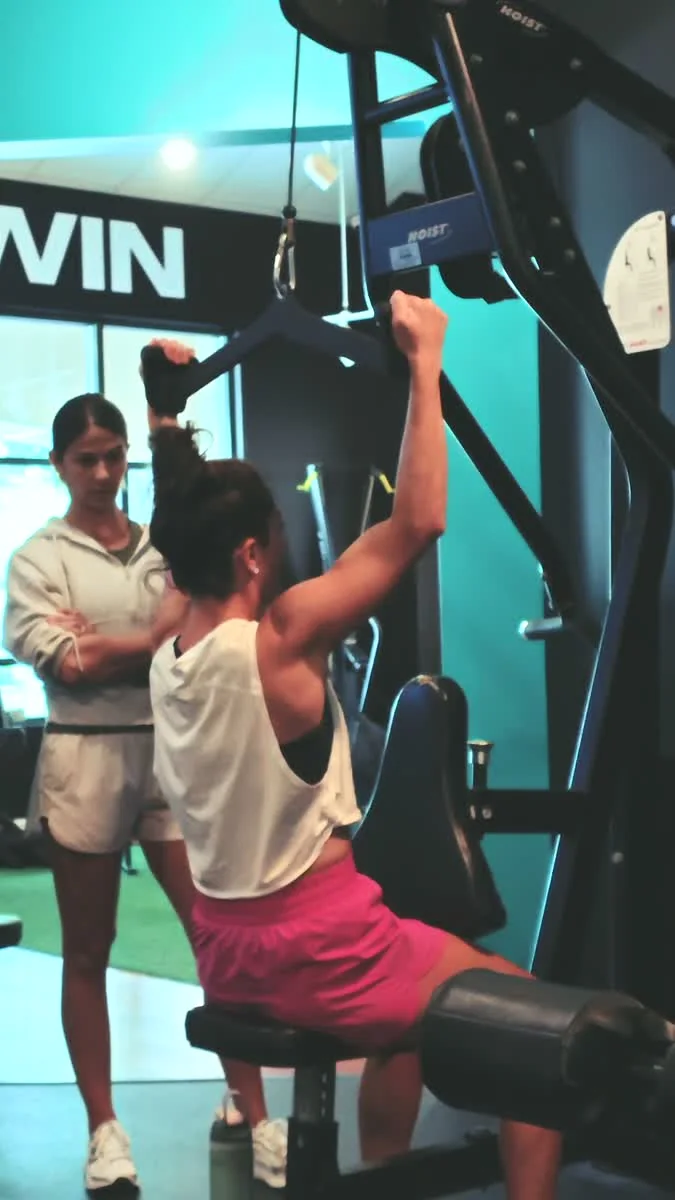

A stiff low back is one of the most common reasons people walk into GSS. It might come from long hours at a desk, a weekend of yard work, a few too many rounds of golf, or simply getting older. Very often it improves with the right kind of movement. Sometimes it needs a clinician first. Knowing the difference saves time and keeps you safe.
This article is general education, not diagnosis. If you are unsure, see your doctor or a physical therapist before you train.
Quick answer
General stiffness without warning signs often responds well to gradual strength training, regular walking and mobility work, including assisted stretching. Pain after a fall or injury, pain with numbness, weakness, fever, unexplained weight loss, or changes in bladder or bowel control needs medical evaluation first. Once you are cleared, a trainer can build back strength and confidence within your provider's guidance.
See a clinician first if you have any of these
- Pain that started after a fall, car accident or other trauma
- Numbness, tingling or weakness in the legs, or pain that travels below the knee
- Changes in bladder or bowel control, or numbness in the groin area (seek urgent care)
- Fever, unexplained weight loss or a history of cancer
- Pain that is severe at night or does not change with position
- Pain that is getting steadily worse instead of better
These are not things a trainer or stretch therapist should manage. A physician or physical therapist can assess them and tell you what is safe.
Who does what
| Professional | Best for | What they do not do |
|---|---|---|
| Physician or physical therapist | Diagnosis, injury, warning signs, rehabilitation | Long-term general fitness programming |
| Personal trainer | Building strength and capacity once you are cleared | Diagnose or treat pain |
| Assisted stretch therapist | Guided mobility work that complements training | Massage therapy or clinical treatment |
Our comparison of assisted stretch, massage and physical therapy goes into this in more detail.
Why strength training often helps
Many people with a stiff back try to stretch it into submission and avoid lifting anything. For general stiffness, the opposite often works better. Stronger hips, glutes and trunk muscles share the load your back carries every day. Learning to hinge, squat and carry well means everyday tasks stop feeling risky.
Movement itself helps too. Clinical guidance for common low back pain generally encourages staying active rather than resting in bed, within what feels manageable.
How we start with a stiff back
- Ask and assess. We go through your history, any clinician guidance and what movements bother you. Then we look at how you hinge, squat, rotate and balance.
- Find movements that feel fine. There is almost always a version of each pattern you can do comfortably. That is where we start.
- Build gradually. Load, range and complexity increase over weeks, guided by how your back responds the next day.
- Add mobility where it is useful. Hip and upper-back mobility, and sometimes assisted stretch therapy, complement the strength work.
- Re-check. We compare against your baseline every few weeks and adjust.
Exercises we often use early
Every plan is individual, but early sessions commonly include:
- Hip hinge practice with a dowel, then a light kettlebell deadlift from a raised height
- Glute bridges and hip thrust variations
- Bird dogs and dead bugs for trunk control
- Suitcase or farmer's carries
- Supported split squats
- Gentle thoracic rotation for golfers and desk workers
None of these should cause sharp pain. Mild effort and the feeling of muscles working are normal; pain that spikes or lingers into the next day means the plan needs adjusting.
Desk workers and golfers
Two groups we see constantly in Bluffton are people who sit most of the day and golfers who rotate hard several times a week. If you sit a lot, our desk job mobility plan has a simple routine for the workday. Golfers will get more from a TPI-informed golf fitness screen, which looks at the hip and upper-back rotation that often protects the low back during the swing.
Working with your provider
If you are seeing a physical therapist, we are happy to work alongside them. Bring your discharge notes or exercise list, and we will build on that plan rather than starting over. As a coach with a master's in kinesiology and a background in corrective exercise, I take that handoff seriously, but treatment stays with your clinician.
FAQs
Should I stop lifting if my back is stiff?
Not necessarily. General stiffness without warning signs often improves with sensible, gradual strength work. Stop and see a clinician if you have numbness, weakness, pain after trauma or any of the warning signs listed above.
Can a personal trainer help with back pain?
A trainer can help you build strength and confidence once a clinician has ruled out anything serious and cleared you to exercise. Trainers do not diagnose or treat pain.
Is assisted stretching good for a stiff back?
It can complement strength training by improving hip and upper-back mobility. It is a fitness service, not massage or physical therapy.
How long until a stiff back feels better with training?
It varies. Many people notice everyday tasks feel easier within a few weeks of consistent training, but there is no guaranteed timeline. Your coach will track progress against your baseline.
GSS provides fitness, mobility, and wellness services. This content is educational and is not medical diagnosis or treatment.