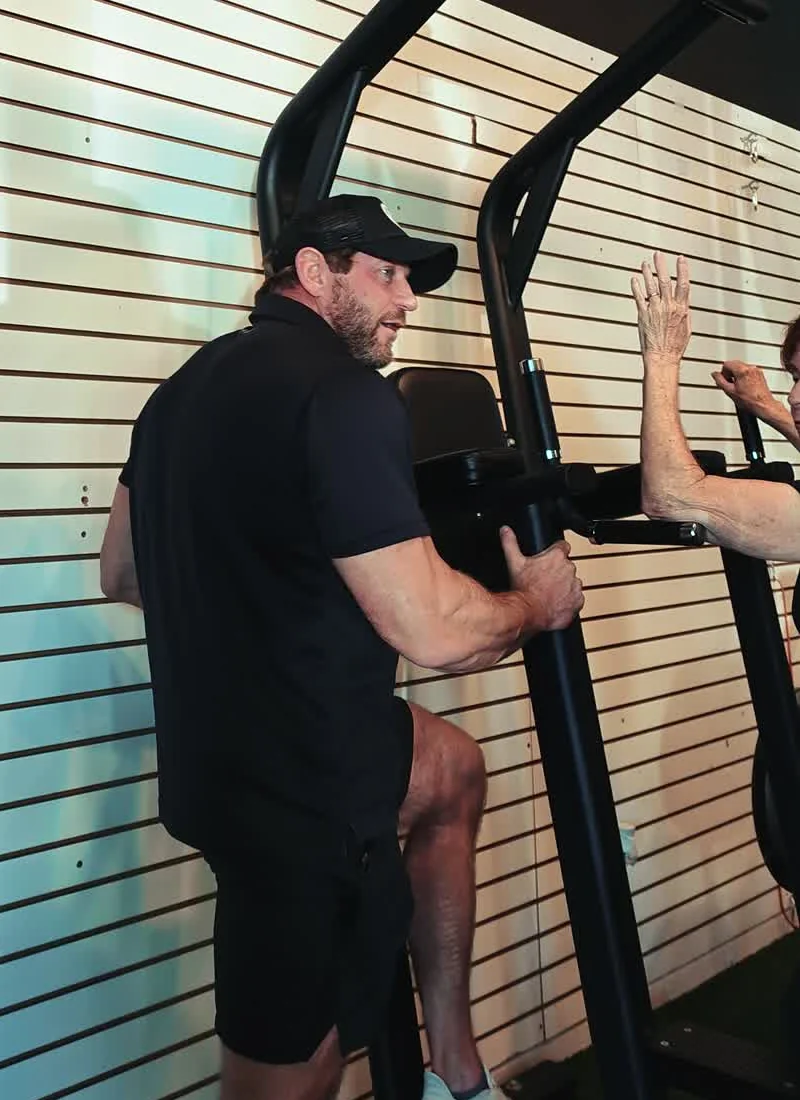

Most people who book a first session with a personal trainer are a little nervous. They worry they will be the least fit person in the room, that they will be pushed too hard, or that they will not know how anything works. That is normal, and a good first session is designed with it in mind.
This is what a first visit to GSS in Bluffton actually looks like, so you can walk in knowing the plan.
Quick answer
Your first appointment is mostly conversation and assessment, with some real training at the end. Expect to talk through your goals and history, move through a handful of simple tests, and finish with a short workout pitched at your level. Wear clothes you can move in, bring water and a list of any injuries or medications, and plan for about an hour.
Before you arrive
When you book a complimentary consultation, we ask a few questions about what you want to work on. You do not need a perfect answer. "I want to feel stronger," "my back is stiff after golf" and "I have not trained in ten years" are all useful starting points.
A few things help us prepare:
- Any surgeries, injuries or conditions you are managing, and any guidance your doctor or physical therapist has given you
- Medications that affect heart rate, blood pressure or balance
- Your realistic weekly schedule, including travel
- What you have tried before and what made it hard to keep going
If you are returning from surgery or have a medical condition, get clearance from your provider first and bring any written restrictions. Trainers work inside those limits; we do not diagnose or treat.
What to wear and bring
| Bring | Why |
|---|---|
| Comfortable clothes you can squat and reach in | The assessment includes bending, reaching and stepping |
| Supportive, flat-soled shoes | Stable footing for strength work; very cushioned running shoes can feel wobbly |
| A water bottle | Bluffton humidity is real, even indoors after a summer drive |
| Your injury and medication notes | Changes which tests and exercises are appropriate |
| Glasses or a hair tie if you need them | Small things, but they matter when you are moving |
Eat something light one to two hours before. Arriving very hungry or straight after a big meal both make the session harder than it needs to be.
Step 1: the conversation
We start by sitting down. Your trainer will ask about your goals, your history with exercise, how you sleep, how stressed your weeks are and what a good outcome would look like six months from now. This is not small talk. It decides how hard to push, which movements to start with and how often you should realistically train.
It is also your chance to interview us. Ask how sessions are structured, who you will train with, and what happens if you travel. Our checklist for choosing a personal trainer has the questions worth asking any coach, including us.
Step 2: the movement assessment
Next comes a short, practical assessment. It is not a fitness test you can fail. The point is to see how you move today so the plan starts in the right place. Depending on your goals it may include:
- A bodyweight squat or sit-to-stand from a box
- A hip hinge, the pattern behind picking things up safely
- Shoulder and hip range of motion
- Single-leg balance
- A light push and pull to gauge upper-body strength
- For golfers, rotation and the screens used in TPI-informed golf fitness
Your trainer notes what moves well and what is restricted. Those notes become your baseline, which is how you will see progress later instead of guessing at it.
Step 3: a first workout at your level
The last part of the session is training. For most new clients it is simple on purpose: a few foundational movements, taught carefully, with enough effort to feel like exercise but not so much that you dread coming back. A good first workout should leave you feeling capable rather than crushed.
You will hear the word "regression" a lot. It just means an easier version of a movement. Starting with a regression is how you build the skill and strength to progress, and it is not a judgment.
How you might feel the next day
Some muscle soreness 24 to 48 hours after a new workout is common, especially in the legs and glutes. It usually eases with gentle movement, a walk and normal sleep. Sharp pain, joint pain that lingers or anything that worries you should be reported to your trainer, and to your doctor if it is more than ordinary soreness.
Tell your trainer how you felt at the start of your next session. That feedback is part of how the plan is adjusted.
What happens after the first session
From the assessment and that first workout, your trainer recommends a starting rhythm: how many coached sessions a week, what to do on your own days, and when to re-check your baseline. Our guide to how often to see a personal trainer explains how we think about frequency.
You can see the full process, our coaches and current options on the personal training in Bluffton page. If cost is the deciding factor, read how to compare personal trainer costs before you commit to anything.
FAQs
How long is the first personal training session?
Plan for about an hour. Sessions at GSS are one-hour, one-on-one appointments, and the first one includes the conversation and assessment.
Do I need to be in shape before I start?
No. The assessment exists to find your starting point. Beginners, people returning after years away and adults over 50 all start at their own level.
Will I be sore after my first session?
Mild soreness for a day or two is common after new exercise. A good first session is pitched so you can train again later in the week. Report sharp or lingering pain.
Is the consultation free?
Yes. GSS offers a complimentary consultation so you can ask questions and understand the next step before buying anything. Request one here.
GSS provides fitness, mobility, and wellness services. This content is educational and is not medical diagnosis or treatment.